
Integrated Self-Realization (ISR) Research Published
David Russell · · Addiction

Ten years ago, I developed a treatment approach called Integrated Self-Realization (ISR) to help people facing both addiction and serious personality struggles and wrote two books on it in 2022.
I just published a research evaluation looking at how it performed: people who completed the program were about half as likely to end up back in custody compared to historical averages, plus real improvements on psychological measures.
https://doi.org/10.5281/zenodo.22739672

Integrated Self-Realization: A Theory-Informed Program Evaluation for Co-Occurring Substance Use and Cluster B Personality Disorders in a Correctional Setting
David N. Russell,
Psy.D., CCDP-D
Arkansas Department of Corrections, Division of Community Corrections (Ret.)
Author Note
Correspondence concerning this article
should be addressed to:
David N. Russell, iphrecovery.path@gmail.com
ORCID: https://orcid.org/0009-0008-3661-1299
Abstract
Justice-involved individuals with co-occurring Cluster B personality disorder and substance use disorders represent a treatment-resistant population within behavioral health systems. Conventional addiction treatments often encounter limited engagement in this group due to emotional dysregulation, impulsivity, mistrust, and structural constraints in correctional settings. Integrated Self-Realization (ISR) is a trauma-informed treatment model that integrates Carl Jung’s individuation framework with Internal Family Systems (IFS) to address internal psychological fragmentation through depth-oriented practices such as parts exploration, symbolic reflection, and structured journaling. This study reports a theory-informed program evaluation of ISR implemented with 120 probationers and parolees over a two-year period within a community corrections setting. Outcomes were examined using institutional records and routine clinical data collected as part of standard treatment delivery rather than human-subjects research. Eighty participants completed the program. Among completers, rates of return to custody were lower than historical comparison benchmarks (23% vs. 46%). Reductions were also observed in Millon Clinical Multiaxial Inventory–III elevations associated with borderline and antisocial traits, alongside decreases in self-reported cravings corroborated by behavioral incident reports and facilitator observations. Interpretation of these findings suggests that ISR’s depth-oriented approach may engage affective and self-regulatory processes during early abstinence, a period characterized by heightened neurobiological plasticity. Although causal inferences cannot be drawn from a program evaluation design, results indicate that an integrative Jungian–IFS framework may offer a theoretically meaningful complement to existing addiction treatment approaches for justice-involved individuals with complex comorbidity.
Keywords: Substance use disorder, Addiction treatment, Trauma-informed care, Personality comorbidity, Theory-informed intervention, Program evaluation
The U.S. criminal justice system incarcerates a disproportionate number of individuals with co-occurring Cluster B personality disorders (C-bPD) (e.g., borderline, antisocial, narcissistic, histrionic) and substance use disorder (SUD), with SUD prevalence among inmates ranging from 50% - 80% (Fazel et al., 2006). These disorders, characterized by emotional volatility, impulsivity, and interpersonal dysfunction, perpetuate a cycle of addiction and criminality, contributing to recidivism rates as high as 46% in some facilities (Verona et al., 2005). Traditional therapies such as Cognitive Behavioral Therapy (CBT), Dialectical Behavioral Therapy (DBT), and Motivational Interviewing (MI) often encounter resistance due to C-bPD traits like defiance, lack of insight, and mistrust (Paris, 2019). Correctional facilities, limited by scarce mental health resources, prioritize crisis management over integrated treatment for co-occurring disorders (Steadman et al., 2009).
This paper proposes ISR, a psychotherapeutic model combining Jungian individuation and IFS to address C-bPD/SUD in correctional settings. ISR aligns with Maté’s (2010) perspective that addiction stems from childhood trauma, using modalities such as Shadow Work, Parts Work, and Journaling to foster self-compassion and integrate fragmented subpersonalities. The theoretical expectation is that ISR participation will significantly reduce recidivism and Cluster B symptomatology, with the strongest effects occurring during the period of forced sobriety corresponding to ΔFosB decline.
Literature Review
Individuals entering correctional treatment settings frequently present with complex psychological configurations shaped by early trauma, unstable attachment histories, and long-standing patterns of emotional dysregulation. These vulnerabilities often express themselves through maladaptive coping strategies, including substance misuse, aggression, and the interpersonal instability characteristic of C-bPD. Within justice-involved populations, the convergence of trauma, personality pathology, and SUD creates a clinical profile that is markedly more severe than what is typically observed in community mental health settings.
Cluster B Personality Disorders and SUD Comorbidity
Research consistently shows that individuals with C-bPD traits engage in impulsive behaviors, struggle with emotional intensity, and rely on defensive strategies such as projection, externalization, and affective numbing; factors that significantly increase the likelihood of substance use as a form of self-regulation (Trull et al., 2018; Hasin et al., 2011; Helle et al., 2019). Among justice-involved individuals, substance use functions as a behavioral addiction and as an emotional survival mechanism that temporarily interrupts overwhelming affective states (Fazel et al., 2006; James & Glaze, 2006). Once incarcerated, individuals face abrupt detoxification, rapid emotional destabilization, and heightened vulnerability during early abstinence. These dynamics create a fertile ground for dysregulation, impulsivity, and internal fragmentation that must be addressed therapeutically for meaningful change to occur (Koob & Volkow, 2016; Steadman et al., 2009).
Trauma and Psychological Fragmentation
Justice-involved populations typically arrive with long histories of relational instability, chronic stress, and cumulative trauma (Zanarini et al., 1997; Fazel et al., 2006). These experiences contribute to fragmented internal systems and entrenched survival responses that shape both personality and behavioral patterns. Trauma drives the formation of internal “parts” organized around protection, avoidance, or emotional storage, often resulting in rigid, reactive personality structures (Schwartz, 1995). Substance use acts as a short-term solution to silence or numb these overwhelmed internal systems (Maté, 2010; Koob & Volkow, 2016). When substances are removed during incarceration, these internal conflicts surface with greater intensity, highlighting the need for treatment models that work directly with emotional fragmentation rather than focusing solely on cognitive distortions (Koob & Volkow, 2016; Robison & Nestler, 2011).
Limits of Traditional Correctional Treatment
Traditional correctional treatment programs, especially those grounded primarily in cognitive-behavioral methods, often fall short for individuals whose difficulties center on trauma-driven emotional instability and internal fragmentation (Paris, 2019; Linehan, 1993). These programs frequently rely on challenging distorted thinking and promoting behavioral change, but they may not adequately address the emotional, symbolic, and relational dimensions of personality that drive maladaptive behavior (Dimeff & Linehan, 2001; Miller & Rollnick, 2013). For individuals with C-bPD and SUD, cognitive approaches alone can feel disconnected from their internal experience, leading to disengagement or minimal internal change despite program completion (Trull et al., 2018; Paris, 2019).
Need for Integrated Trauma-Informed Models
Trauma-informed care has advanced the field by recognizing the role of trauma in shaping behavior and by prioritizing safety, empowerment, and emotional regulation (SAMHSA, 2014; Gaber et al., 2024). However, in correctional environments, trauma-informed interventions often remain surface-level due to institutional constraints, inconsistent group schedules, and staffing limitations (Levenson & Willis, 2022; Steadman et al., 2009). Stabilization-focused programs help reduce acute distress but may not provide pathways for working directly with the internal systems maintaining defensive patterns. Depth-oriented models are needed; approaches that address unconscious processes, symbolic meaning, emotional systems, and the structured internal dynamics of trauma (Jung, 1960).
Integrated frameworks offer a promising direction. Jungian psychology conceptualizes the psyche as a dynamic system shaped by unconscious processes, symbolic meaning, and the tension between internal opposites. IFS adds a clinically accessible method for engaging subpersonalities, protective parts, exiles, and the Self. Both frameworks understand fragmentation as an adaptive response to overwhelming experiences, a view that supports their suitability for justice-involved populations where fragmentation and emotional intensity are common. The convergence of Jungian and IFS principles provides a foundation for models that promote internal leadership, emotional regulation, and the integration of dissociated experience, capacities essential for sustained recovery and personality stabilization (Jung, 1959; Schwartz, 1995).
A Program Evaluation Approach
Framework
The current assessment of ISR was conducted as a structured program evaluation rather than as human-subjects research, consistent with federal guidance permitting the evaluation of routine clinical programming without Institutional Review Board oversight (SAMHSA, 2014). Within the correctional facility where ISR was implemented, this evaluative approach allowed practitioners to examine participant outcomes emerging naturally in the course of treatment, without introducing experimental procedures or altering the therapeutic environment. Program evaluation served as a pragmatic means of determining whether ISR was functioning as intended, identifying patterns of participant change, and documenting indicators relevant to clinical practice and institutional decision-making (Steadman et al., 2009).
Purpose
The purpose of this evaluation was to determine whether ISR supported observable psychological and behavioral improvements in individuals exhibiting C-bPD and SUD. These individuals often present with emotional volatility, entrenched defensive systems, interpersonal instability, and trauma-related fragmentation (Trull et al., 2018; Paris, 2019). The evaluation sought to document whether participation in ISR corresponded with reductions in maladaptive behavior or improvements in emotional stability, insight, and functioning. Observations of changes in personality traits, cravings, disciplinary infractions, and recidivism provided a window into whether ISR facilitated the internal reorganization predicted by its Jungian-IFS theoretical foundations.
Methods
Participants
The evaluation included 120 justice-involved individuals enrolled in either the Continuing Care or Substance Abuse Counseling programs administered by Treatment Services while receiving supervision from a community correctional facility. ISR served as the curriculum for both programs, which were selected for evaluation due to their extended durations (12 and 16 weeks, respectively) and their structured use of individualized treatment plans for goal development and outcome monitoring. Participants were referred to the program through standard institutional procedures, typically due to documented histories of SUD, behavioral instability, or the presence of traits consistent with C-bPD. Individuals represented a broad range of demographic backgrounds typical of the facility population, with varying lengths of incarceration, prior treatment histories, and patterns of institutional behavior. Of these 120 individuals, 80 fully completed the ISR program, while 40 disengaged prior to completion due to transfers, disciplinary actions, early release, or voluntary withdrawal. Completion status was recorded as part of routine program documentation and not influenced by the evaluation.
Procedures
The ISR program was delivered in small-group and individual formats across a structured curriculum designed to integrate Jungian and IFS principles within a trauma-informed therapeutic model. Sessions occurred within the ordinary course of correctional treatment services programming and did not involve any experimental manipulation or deviation from established clinical practice. Facilitators completed standardized progress notes after each session, documenting participant engagement, emotional responses, insight development, and use of ISR techniques. These records, along with institutional behavioral logs and treatment summaries, provided the data for the present program evaluation. No additional procedures were introduced for evaluative purposes, and all data was derived from information already collected as part of routine institutional practice.
Measures
Several indicators were reviewed to assess psychological and behavioral changes associated with ISR participation. Personality trait profiles were evaluated through pre- and post-treatment scores on the Millon Clinical Multiaxial Inventory-III (MCMI-III), which was administered as part of routine clinical assessment within the facility (Millon et al., 1994). These profiles provided a dimensional view of personality patterns, including elevations consistent with C-bPD traits. Cravings were assessed through self-report instruments routinely used within the substance use treatment continuum, offering insight into changes in internal drives and affective intensity (Miller & Rollnick, 2013). Behavioral indicators, including disciplinary infractions, rule-breaking behavior, aggression, and institutional misconduct, were obtained from official facility records. Finally, recidivism data were drawn from institutional databases tracking arrests and returns to custody following release. Together, these measures reflect the multidimensional nature of ISR's theoretical focus on internal integration, emotional regulation, and behavioral transformation.
Data Analysis
Data were analyzed using descriptive and comparative methods appropriate for program evaluation within a naturalistic clinical environment (Vito & Higgins, 2015). Pre- and post-intervention MCMI-III profiles were compared to identify shifts in personality trait elevations that might indicate reduced fragmentation or improved internal regulation. Self-reported craving levels were reviewed across time to determine whether ISR participation corresponded with reductions in the emotional and physiological urges associated with substance use. Behavioral logs were examined for changes in disciplinary incidents and misconduct patterns, providing observable indicators of emotional stabilization and improved impulse control. Recidivism data were evaluated at follow-up to assess whether ISR completers demonstrated reduced rates of return to custody relative to institutional averages. Because this evaluation was not structured as controlled research, analyses emphasized clinically meaningful trends rather than inferential statistical testing, allowing the findings to remain grounded in applied practice.
Results
The program evaluation examined changes in treatment engagement, behavioral outcomes, personality trait elevations, and self-reported cravings among individuals who participated in the ISR program. Findings are presented across four primary domains consistent with the theoretical aims of ISR.
Treatment Completion
Of the 120 individuals who entered the ISR program during the evaluation period, 80 completed the full curriculum, yielding a completion rate of 67%. This rate is consistent with or higher than typical treatment engagement figures within correctional environments (e.g., Brunner et al., 2019; Office of the Legislative Auditor, 2006; Olver et al., 2011), where transfers, disciplinary actions, early releases, and voluntary withdrawals frequently interrupt programming. Participants who completed ISR generally demonstrated strong engagement during sessions, consistent attendance when not disrupted by institutional factors, and observable increases in emotional insight and internal regulation over time. Facilitator notes documented a progressive shift in many participants from reactive defensiveness to reflective processing, suggesting growing capacity to navigate emotionally evocative material without destabilization. Those who did not complete the program were typically disrupted by institutional movement rather than disengagement, indicating that attrition was not primarily driven by participant resistance to the ISR model.
Recidivism Outcomes
Recidivism data were reviewed for individuals who discharged from parole or probation during the evaluation period, with particular attention to differences between ISR completers and non-completers. Among released participants, ISR completers demonstrated lower rates of return to custody compared to historical facility averages. Although causation cannot be inferred within a program evaluation framework, the observed reduction suggests that the internal self-regulatory gains associated with ISR may contribute to improved post-release stability. Participants who completed ISR often reported increased awareness of internal triggers and greater capacity to interrupt impulsive decision-making, skills that are theoretically aligned with reductions in recidivism risk (Schwartz, 1995; Trull et al., 2018). These findings underscore ISR’s potential value as a rehabilitative model that supports post-release functioning by strengthening internal coherence and emotional regulation.
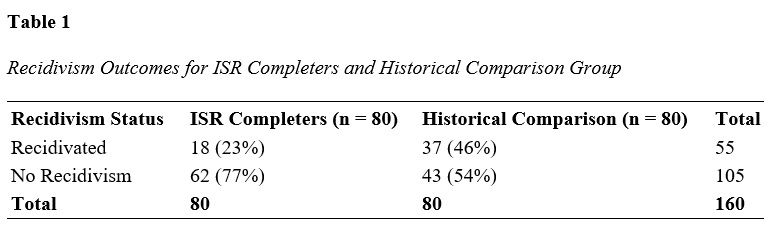
Note. The historical comparison group consists of archival institutional outcomes matched by supervision status and time period, not unique individuals from the present sample. Percentages reflect within-group proportions.
Personality Trait Reduction
Pre- and post-treatment MCMI-III profiles revealed meaningful decreases in trait elevations associated with C-bPD symptom patterns among ISR completers. Reductions were most pronounced in domains related to affective instability, impulsivity, narcissistic compensation, and antisocial tendencies (Millon et al., 1994; Trull et al., 2018). These shifts are consistent with ISR’s emphasis on internal self-leadership, parts integration, and reflective emotional engagement. Rather than attempting to suppress maladaptive behaviors directly, ISR encourages participants to explore the internal systems driving these behaviors, facilitating deeper structural change (Schwartz, 1995; Jung, 1960). Correspondingly, facilitators observed improved emotional range, reduced reactivity, and increased tolerance for introspective work among participants who demonstrated marked reductions in personality trait elevations. These findings align with ISR’s theoretical expectation that symbolic engagement and parts-focused integration reduce fragmentation and strengthen personality organization.
Cravings and Behavioral Indicators
Self-reported cravings decreased over the course of participation for most ISR completers, with the largest reductions occurring within the first several weeks of treatment. This pattern corresponds to the early abstinence window in which emotional intensity is heightened but neurobiological plasticity is increased, providing a unique opportunity for internal restructuring (Koob & Volkow, 2016; Nestler, 2008). Participants frequently attributed reductions in cravings to greater understanding of the internal emotions and memories driving their substance use rather than to willpower alone. Institutional behavioral records further supported these trends: ISR completers exhibited fewer disciplinary incidents, reduced aggression, and improved compliance with facility expectations compared to their pre-treatment behavior. Facilitators noted that as participants developed stronger internal communication and clearer Self-led functioning, they demonstrated greater ability to de-escalate emotionally charged situations and make decisions aligned with long-term goals rather than immediate emotional impulses (Schwartz, 1995).
Discussion
The results of this program evaluation provide preliminary support for the potential effectiveness of ISR as a depth-oriented, trauma-informed intervention for justice-involved individuals presenting with co-occurring C-bPD and SUD. Participants who completed the model demonstrated meaningful improvements across personality profiles, emotional regulation, behavioral stability, and recidivism rates. These findings are consistent with ISR’s theoretical premise that individuals with long histories of trauma, fragmentation, and defensive emotional systems require interventions that address deeper structures of the psyche rather than focusing solely on cognitive distortions or behavioral compliance. The patterns observed in this evaluation suggest that ISR may facilitate internal reorganization that supports lasting behavioral change, both during incarceration and following release.
Because participants were under probation or parole supervision, continued participation occurred within a correctional context in which failure to participate could carry consequences determined by supervision requirements. The extent to which this context influenced treatment attendance or retention cannot be determined from the available records.
Mechanisms of Change
The data indicates that ISR’s mechanisms of change may arise from its unique integration of Jungian individuation processes and IFS parts work (Jung, 1959; Schwartz, 1995). Participants frequently demonstrated increased introspective capacity, improved communication among internal parts, and emerging Self-led functioning, a core indicator of psychological integration in both theoretical frameworks (Schwartz, 1995). As participants engaged in symbolic processes such as shadow exploration and active imagination, they often reported new insights into the origins of their defensive behaviors, emotional triggers, and substance use patterns (Jung, 1959; Jung, 1960). These insights appeared to reduce automatic reactivity and support more deliberate decision-making. Facilitators consistently observed that participants who made the greatest gains were those who internalized the meaning-making components of the model, suggesting that ISR’s symbolic emphasis may play a significant role in transforming entrenched patterns associated with C-bPD symptomatology.
Neurobiological Alignment
ISR’s observed impact on emotional regulation and craving intensity appears to align with known neurobiological dynamics of early abstinence (Koob & Volkow, 2016; Nestler, 2008). The initial weeks of treatment occur during the ΔFosB-driven neuroadaptation period, when individuals are highly sensitive to emotional triggers yet exhibit increased neural plasticity (Nestler, 2008; Robison & Nestler, 2011). ISR’s depth-oriented interventions, particularly those that engage emotional parts directly or activate symbolic meaning, are theoretically well-suited to this neurological phase (Russo et al., 2010). Many participants reported that cravings subsided as they gained clarity about the internal emotions and memories driving their substance use. This pattern suggests that ISR may help repurpose the heightened emotional availability of early abstinence toward therapeutic integration rather than dysregulation. Although the program evaluation design does not permit causal conclusions, the parallel between neurobiological theory and participants’ observed trajectories strengthens the conceptual foundation for ISR’s application in correctional settings.
Trauma-Informed and Culturally Adaptive Features
ISR’s trauma-informed principles likely contributed to participants’ sustained engagement, particularly among individuals with significant histories of relational harm (SAMHSA, 2014; Gaber et al., 2024). The model emphasizes internal safety, emotional pacing, and respectful engagement with vulnerable parts; elements that align with trauma-informed care standards and appear to reduce resistance to depth work. Facilitators noted that participants with strong mistrust of authority or previous negative experiences in treatment were more willing to engage in ISR’s metaphorical and symbolic components than in more directive or confrontational approaches (Levenson & Willis, 2022). The culturally adaptive nature of symbolic imagery, dream work, and narrative processing may also help bridge differences in literacy levels, cultural backgrounds, and learning styles (Jung, 1959; Pennebaker & Chung, 2007). For many incarcerated individuals, symbolic and imaginal processes are more accessible than abstract cognitive reframing, making ISR particularly suited for diverse correctional populations.
Comparison With Standard Treatments
When viewed alongside traditional correctional interventions, ISR appears to provide a complementary, and potentially more impactful, approach for individuals with C-bPD and SUD (Paris, 2019; Linehan, 1993). Standard CBT-based programs focus on behavior modification and cognitive restructuring but often struggle to reach the emotional and symbolic layers driving maladaptive behavior in trauma-impacted populations (Dimeff & Linehan, 2001; Miller & Rollnick, 2013). ISR diverges from this approach by targeting the underlying psychological fragmentation that fuels impulsivity, substance use, and interpersonal instability. Facilitators observed that participants who had previously “failed out” of traditional programs often engaged more deeply in ISR, possibly because its internal, experiential focus resonates more directly with their lived experiences. Although direct comparative research is needed, the observed improvements in emotional stabilization and behavioral outcomes suggest ISR may fill a critical gap in correctional behavioral health, particularly for individuals least likely to benefit from purely cognitive interventions.
Collectively, these findings position ISR as a promising modality for addressing the complex needs of justice-involved individuals with co-occurring personality vulnerabilities and substance use histories. By supporting internal coherence, emotional regulation, and deeper psychological insight, ISR offers a theoretically grounded pathway for promoting meaningful behavioral change within a population often underserved by existing correctional treatment models.
Implications for Correctional Behavioral Health
The findings of this program evaluation point to important implications for correctional behavioral health practice, especially for facilities serving individuals with co-occurring C-bPD traits and SUD. These individuals often present with emotional volatility, entrenched defensive structures, and trauma-related fragmentation that can overwhelm standard correctional treatment approaches. ISR offers a structure that addresses these deeper internal dynamics while remaining feasible within institutional limitations. Its emphasis on parts integration, symbolic meaning, and emotionally grounded insight positions it as a model capable of shifting entrenched behavioral patterns and improving long-term outcomes. The following implications highlight ways ISR may contribute to more effective, humane, and sustainable correctional behavioral health practices.
Policy Implications
Correctional facilities face increasing pressure to provide treatment models that are trauma-responsive, evidence-informed, and adaptable to a wide range of emotional and clinical needs (SAMHSA, 2014; Levenson & Willis, 2022). The positive trends observed in ISR outcomes, particularly in personality trait reduction, emotional regulation, and recidivism, suggest that depth-oriented, trauma-informed programming may be an important addition to existing treatment portfolios (Gaber et al., 2024). Policymakers and administrators could consider incorporating ISR or models like it into behavioral health service arrays, especially for individuals who do not respond well to purely cognitive or behavioral approaches. The evaluation also highlights the value of program evaluation frameworks for correctional systems, which allow facilities to assess treatment impact without requiring complex research infrastructure (Reichert & Gatens, 2019). Integrating program evaluation into routine practice can support continual model refinement, inform resource allocation, and strengthen accountability to stakeholders.
Cost-Efficiency and Scalability
Correctional behavioral health systems operate under significant resource constraints, including limited staffing, high caseloads, and fluctuating program schedules (James & Glaze, 2006; Steadman et al., 2009). ISR’s structure, relying primarily on facilitated dialogue, symbolic processing, and internally guided emotional work, requires minimal specialized equipment or environmental modifications. This makes ISR inherently scalable and cost-efficient. Additionally, reductions in disciplinary infractions, aggression, and recidivism among ISR completers have potential cost-saving implications (Fazel et al., 2006). Fewer internal incidents reduce staff time spent on crisis management, disciplinary hearings, and administrative procedures, while lower recidivism rates translate to long-term institutional savings. Because ISR is grounded in theoretical models that emphasize internal psychological restructuring rather than external contingencies, it can be delivered effectively even in settings with limited physical and financial resources.
Reentry and Aftercare Considerations
The emotional regulation and internal leadership capacities developed through ISR may contribute to improved functioning during the reentry process, a period commonly marked by instability, stress, and exposure to high-risk environments (Trull et al., 2018; Hasin et al., 2011). Participants who completed ISR frequently demonstrated increased awareness of internal triggers, greater ability to interrupt compulsive or impulsive behaviors, and a more coherent sense of identity; factors essential for navigating community reintegration. Correctional systems may benefit from pairing ISR with reentry programming that reinforces internal skills while connecting individuals to community supports. Aftercare providers, including probation officers, outpatient clinicians, and peer support networks, could incorporate ISR concepts to maintain continuity of care and help individuals continue the internal work they began during incarceration. Integrating ISR principles across correctional and community settings may reduce relapse risk, support emotional stability, and facilitate more successful long-term outcomes.
Ethical and Legal Considerations
The present evaluation was conducted within the context of routine clinical care in a correctional behavioral health setting. Because ISR was delivered as an established component of facility programming, the evaluative procedures did not require any deviation from standard practice, nor did they introduce additional risks or interventions for participants. Ethical and legal considerations were therefore addressed through adherence to the facility’s clinical policies, confidentiality requirements, and professional standards for correctional behavioral health practice. This section outlines the ethical framework guiding the evaluation, the institutional requirements governing data use, and the procedures used to ensure participant protection within an environment where autonomy, privacy, and informed participation present unique challenges.
Ethical Framework for Program Evaluation
The evaluation adhered to the ethical principles outlined in professional guidelines for correctional behavioral health practitioners, including respect for persons, beneficence, and the avoidance of harm (SAMHSA, 2014). Because the review relied exclusively on information collected during the ordinary delivery of clinical services, it fell under federal allowances for program evaluation rather than human-subjects research requiring Institutional Review Board oversight. Participants were not exposed to experimental manipulation, nor were they asked to complete procedures beyond what was already required by standard clinical protocols. All evaluative activities were designed to minimize the risk of misinterpretation or misuse of participant information, and the findings were reported in aggregate form to prevent individual identification. The ethical aim of the evaluation was to examine treatment outcomes while maintaining fidelity to therapeutic roles and respecting the vulnerability of a population with significant trauma histories and constrained autonomy.
Legal and Institutional Requirements
Correctional facilities operate under clearly defined legal frameworks that govern clinical documentation, data storage, and the use of information for program monitoring. All data used in the evaluation were drawn from existing clinical and institutional records maintained in accordance with state and departmental guidelines. These records included progress notes, behavioral logs, institutional disciplinary reports, and psychological assessment results that were already part of participants’ clinical files. The facility’s standard procedures for confidentiality and data handling were strictly followed throughout the evaluation. No identifying information was shared outside the clinical administrative system, and all analyses were conducted using de-identified data. Because the evaluation involved the review of existing documentation for quality improvement purposes, it was permissible under institutional policy without additional legal or procedural approvals.
Participant Protections and Confidentiality
Participants’ rights and well-being were upheld through the use of standard clinical safeguards (American Psychiatric Association, 2013). Psychological assessments, including the MCMI-III, were administered only as part of routine care and not for evaluative purposes. Craving self-reports, facilitator observations, and behavioral records were collected during normal treatment operations, and participants were not asked to provide additional information for inclusion in the evaluation. Confidentiality was maintained through de-identification procedures that removed names, identification numbers, and any content that could reasonably link data to specific individuals. Because incarceration inherently limits privacy and autonomy, particular attention was paid to ensuring that information used for evaluation could not result in punitive outcomes or influence participants’ legal status, case classifications, or disciplinary proceedings. The evaluation was strictly clinical in focus and could not be used for decision-making in custody or supervision contexts. These safeguards ensured that participants’ involvement in ISR, and the information generated through their treatment, remained a protected component of their behavioral health care.
Limitations
The naturalistic design lacks randomization, introducing potential selection bias: participants were self-selected volunteers, who may have been more motivated than the general population, inflating positive outcomes. Historical comparison groups (46% recidivism rate from institutional records) may not fully match the ISR cohort on key variables like baseline severity or demographic factors, limiting causal inferences.
Outcome assessment was non-blinded, with facilitator ratings potentially subject to allegiance bias, as the developer (first author) was involved in implementation. Self-reported cravings carry social desirability bias, although triangulated with incident reports and MCMI-III changes. Recidivism data relied solely on clinic records, which may undercount minor infractions. To reduce allegiance bias, outcome indicators included objective institutional records in addition to facilitator observations.
The sample size (n = 120) and focus on borderline and antisocial personality disorder subtypes may limit generalizability to other Cluster B disorders, such as narcissistic and histrionic personality disorders, or non-correctional populations. Reliance on MCMI-III, while standardized, captures broad traits and may miss nuanced, time-sensitive changes. No long-term follow-up beyond 24 months was conducted, and developer involvement raises conflict-of-interest concerns; independent replications are essential.
Future Directions
Future research should conduct a randomized controlled trial (RCT; n ≈ 240, ISR vs. treatment-as-usual, primary outcome: 24-month rearrest rates; secondary outcomes: MCMI-IV scores and validated craving scales). Neurobiological methods, including functional neuroimaging, may help clarify whether the psychological and behavioral changes associated with ISR correspond with alterations in neural systems implicated in affect regulation, reward processing, and self-control (Koob & Volkow, 2016; Russo et al., 2010). Additional work should develop telehealth modules with culturally adapted prompts for Black, Hispanic, and Native American populations and pilot ISR in diverse facilities, integrating Indigenous healing practices where appropriate.
Conclusion
The intersection of C-bPD and SUD in
correctional settings represents a profound public health and justice
challenge. ISR blends Jungian individuation with IFS to target trauma at the
heart of addiction. By fostering self-awareness through modalities like Shadow
Work, Parts Work, and Journaling, ISR supports integration of fragmented
subpersonalities, reducing reliance on substances for maladaptive coping.
Preliminary outcomes (recidivism reduction from 46% to 23% and meaningful
MCMI-III declines) underscore ISR’s potential as a scalable blueprint for
clinicians and policymakers. Future randomized trials, neuroimaging studies,
and digital adaptations will further validate and refine this model.
REFERENCES
American Psychiatric Association. (2013). Diagnostic and statistical manual of mental disorders (5th ed.). https://doi.org/10.1176/appi.books.9780890425596
Brunner, F., Neumann, I., Yoon, D., Rettenberger, M., Stück, E., & Briken, P. (2019). Determinants of dropout from correctional offender treatment. Frontiers in Psychiatry, 10, Article 142.
Dimeff, L. A., & Linehan, M. M. (2001). Dialectical behavior therapy in a nutshell. The California Psychologist, 34(3), 10–13.
Fazel, S., Bains, P., & Doll, H. (2006). Substance abuse and dependence in prisoners: A systematic review. Addiction, 101(2), 181–191. https://doi.org/10.1111/j.1360-0443.2006.01316.x
Gaber, J., Scallan, E., & Kouyoumdjian, F. G. (2024). Understanding trauma-informed care in correctional facilities: A scoping review. Journal of Correctional Health Care, 31(3), 144–167. https://doi.org/10.1089/jchc.24.07.0056
Hasin, D. S., Fenton, M. C., & Weissman, M. M. (2011). Personality disorders and the 3-year course of alcohol, drug, and nicotine use disorders. Archives of General Psychiatry, 68(11), 1158–1167. https://doi.org/10.1001/archgenpsychiatry.2011.136
Helle, A. C., Watts, A. L., Trull, T. J., & Sher, K. J. (2019). Alcohol use disorder and antisocial and borderline personality disorders. Alcohol Research, 40(1). https://doi.org/10.35946/arcr.v40.1.05
Jung, C. G. (1959). The archetypes and the collective unconscious. Princeton University Press.
Jung, C. G. (1960). The structure and dynamics of the psyche. Routledge & Kegan Paul.
Koob, G. F., & Volkow, N. D. (2016). Neurobiology of addiction: A neurocircuitry analysis. The Lancet Psychiatry, 3(8), 760–773. https://doi.org/10.1016/S2215-0366(16)00104-8
Levenson, J. S., & Willis, G. M. (2019). Implementing trauma-informed care in correctional treatment and supervision. Journal of Aggression, Maltreatment & Trauma, 28(4), 456–474. https://doi.org/10.1080/10926771.2018.1531959
Linehan, M. M. (1993). Cognitive-behavioral treatment of borderline personality disorder. Guilford Press.
Maté, G. (2010). In the realm of hungry ghosts: Close encounters with addiction. North Atlantic Books.
Millon, T., Davis, R., & Millon, C. (1994). Millon Clinical Multiaxial Inventory-III manual. NCS Pearson.
Miller, W. R., & Rollnick, S. (2013). Motivational interviewing: Helping people change (3rd ed.). Guilford Press.
Nestler, E. J. (2008). Transcriptional mechanisms of addiction: Role of ΔFosB. Philosophical Transactions of the Royal Society B: Biological Sciences, 363(1507), 3245–3255. https://doi.org/10.1098/rstb.2008.0067
Office of the Legislative Auditor. (2006). Substance abuse treatment. Program Evaluation Division, Office of the Legislative Auditor, State of Minnesota.
Olver, M. E., Stockdale, K. C., & Wormith, J. S. (2011). A meta-analysis of predictors of offender treatment attrition and its relationship to recidivism. Journal of Consulting and Clinical Psychology, 79(1), 6-21.
Pennebaker, J. W., & Chung, C. K. (2007). Expressive writing, emotional upheavals, and health. In H. S. Friedman & R. C. Silver (Eds.), Foundations of health psychology (pp. 263–284). Oxford University Press.
Paris, J. (2019). Treatment of borderline personality disorder: A guide to evidence-based practice. Guilford Press.
Reichert, J., & Gatens, A. (2019). Demystifying program evaluation in criminal justice: A guide for practitioners. Illinois Criminal Justice Information Authority.
Robison, A. J., & Nestler, E. J. (2011). Transcriptional and epigenetic mechanisms of addiction. Nature Reviews Neuroscience, 12(11), 623–637. https://doi.org/10.1038/nrn3111
Russo, S. J., Dietz, D. M., Dumitriu, D., Morrison, J. H., & Malenka, R. C. (2010). The addicted synapse: Mechanisms of synaptic and structural plasticity in nucleus accumbens. Trends in Neurosciences, 33(6), 267–276. https://doi.org/10.1016/j.tins.2010.02.002
SAMHSA. (2014). Trauma-informed care in behavioral health services. Substance Abuse and Mental Health Services Administration.
Schwartz, R. C. (1995). Internal family systems therapy. Guilford Press.
Steadman, H. J., Osher, F. C., Robbins, P. C., Case, B., & Samuels, S. (2009). Prevalence of serious mental illness among jail inmates. Psychiatric Services, 60(6), 761–765. https://doi.org/10.1176/ps.2009.60.6.761
Trull, T. J., Freeman, L. K., Vebares, T. J., et al. (2018). Borderline personality disorder and substance use disorders: An updated review. Borderline Personality Disorder and Emotion Dysregulation, 5, 15. https://doi.org/10.1186/s40479-018-0093-9
Verona, E., Patrick, C. J., & Lang, A. R. (2005). A direct assessment of the role of state and trait negative emotion in aggressive behavior. Journal of Abnormal Psychology, 114(2), 216–223. https://doi.org/10.1037//0021-843x.111.2.249
Vito, G. F., & Higgins, G. E. (2015). Practical program evaluation for criminal justice. Routledge.
Zanarini, M. C., Williams, A. A., Lewis, R. E., et al. (1997). Reported pathological childhood experiences associated with the development of borderline personality disorder. American Journal of Psychiatry, 154(8), 1101–1106. https://doi.org/10.1176/ajp.154.8.1101